Saturday, November 26, 2011

An Entrepreneur Working From the Bottom Up

When thinking about the problems and complexities of our economy today, it is interesting to take a look at businessmen in less developed countries in order to see their views about business, given the context of a relatively blank slate, where the possibilities are more open.

The landscape of our own economy is somewhat different because a certain system is already set in place. This system thrives on a particular model of hyper competition and consumption, and since our current economy has been in the making for several generations, it is sometimes harder to fathom major change.  Although entrepreneurs and consumers are aware of the perils of our current system, our willingness to trade in our current lifestyle is another story.

For these reasons, it is refreshing to hear business ideals from an entrepreneur in a country where such a defined "system" is not necessarily set in place. This article 
Turning Rwanda's rivers into renewable energy gives the reader a glimpse of this unique perspective.


"And how would he describe a good business person?
"When people look at businessmen, they look at money, but I think money is not what makes the person," he said.
"A business, it's working with the people. It's making life easier for others. A good businessman is the one who looks at his neighbours, at his countrymen, at the world," he explained.
"It would be meaningless if I were rich and I'm surrounded by poor people. A good businessman is one who looks first on others before he looks after himself.'"
"Gregory Tayi says that he was forced into business"
Perhaps when trying to find solutions and figure out our own economic ideals, it is necessary to mentally remove ourselves as much as possible from the paradigm that we are used to. If we take a step back and imagine how we would envision an economy starting more or less from scratch, we may be closer to figuring out where we should be, and where we need to start heading.

Wednesday, November 9, 2011

Flickr


I used the tag feature on Flickr to search for the theme “occupy”. This led me to photograph collection of the Occupy Movement in Eugene, Oregon.  There was a wide variety of images that provided a well-rounded and honest portrayel of the ongoing event.

In one respect, I think that this type of photograph collection tells a story very effectively. I was able to view all aspects of the event, from images of individuals to those of groups, and from behind the scenes preparation to the full-fledged rallies.  I think that this is a major strength because viewers are able to get a feeling of what it would really be like to be at the event, including the parts that are good, bad, and merely mundane.

One possible weakness to this type of photograph collection could be that viewers may not be able to come to an overall consensus of what a given event was like. I already knew a good deal about the Occupy movements, so it was not too hard for me to fill in the blanks and to understand this collection. It may be easier in some cases to understand an event if particular photographs are skillfully selected for viewers.

Overall, I think that Flickr provides a unique and beneficial way to view and share events.  Instead of glorifying an event by only sharing the best photographs and high points, I think there is something very valuable about showing all of the moments in between. The transparancy of this type of album does not cause the viewer to beg any questions or distrust any possible motivations.  This allows an honest and accurate portrayel of events, which should be a main expectation for journalists.

Following Mississippi's Initiative 26 on Twitter

It was interesting to see the progression of “tweets” that surrounded the Mississippi initiative that would declare, according to the Mississippi Constitution, that life begins at the moment of fertilization.
If this amendment were passed, it is clear that it would have major implications for subsequent abortion laws.  Furthermore, it seems like this type of legislation would open many doors for the type of issues that the government can regulate.


This being said, there were heated tweets from both sides.  Before the night of the election, it seemed that most comments were being made by people who opposed the initiative. This makes sense, considering that issues usually provoke the most reaction from opponents. 

On the night of the election, it seemed that most of the comments were objective, just stating the fact that the initiative did not pass. This stream of tweets appeared for the most part more coherent than some of the others I had observed in previous days.

After the election, there were many tweets from elated individuals who did not want the initiative to pass, and others, who had supported the initiative, tweeted to the effect that they will not give up.

Watching an aspect of the election unfold via twitter offered an interesting perspective.  It is not that common to see such a live stream of opinions about a current topic. It differed from watching the news because different opinions could be seen, without any need for objectivity or censorship.  This creates a different understanding of issues: It is not just about the prospects and the results, but also about how common people feel about them and react.   

Monday, November 7, 2011

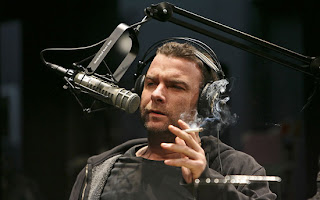
A Bittersweet Experience with Talk Radio

After several long attempts to get on talk radio, and some desperate last shots right before the deadline, I have decided to stop and to reflect about the experience I had, even though I did not attain my goal of getting on the air.

Adapting to the climate of talk radio was definitely a struggle for me at the start.  I have never been a talk radio listener, and the process took some getting used to.  Even though in ways I feel like I have failed to reach my ultimate goal of getting on the air, I also feel that I learned a lot through the course of the assignment.  I definitely came a long way from where I started out a week ago.

During my first attempt at listening to a news/talk show, I struggled to even find a station that I could work with.  Using iHeartRadio, I browsed a variety of news stations, but I struggled to find conversations that I could understand, let alone contribute to.  Topics ranged from specific economic news to sports, both of which I lack up-to-date knowledge about.

As the days progressed, I began to look at radio schedules ahead of time so that I would be sure to listen to conversations from their start. This helped tremendously, and I began to become engaged in conversations that I could actually follow.  Even so, the whole concept of calling in did not come naturally to me. I would not realize that something a host said was even provocative enough to warrant a call. All of a sudden, there would be a caller on the line agreeing with the host, and I would realize time and again that I missed out on a shot.

Although it felt forced, I eventually began to dial into shows, as I became more acquainted with the topics being discussed. Having listened even more extensively to the radio over the past two days, I realized that almost everyone was talking about general economic turmoil, the Herman Cain scandal, and today, the conviction of Michael Jackson’s doctor. I sat for hours on end listening to KTLK-AM, a Los Angeles radio station that has a variety of progressive hosts.

I got through to a screener one time while listening to the Randi Rhodes show on KTLK. The conversation was about Herman Cain, so I said that I wanted to comment about the importance of electing presidential candidates who are trustworthy.  Apart from his allegations of sexual harrassment, I felt that the way he avoided questions showed that he was not transparant enough to be trusted with any topic. I did not end up on the air, however, and this was the closest I came.

Although I had one goal in mind while doing this project, I do still feel like I had minor victories throughout.  In the course of about a week, I became much more familiar with current events. Although I think that hosts should have a more diverse scope of topics so that they are not always repeating themselves and each other, I feel like I got a much more in-depth understanding of several issues than I would have if I were browsing a newspaper or website.  I also learned basic things about talk radio, and how it is set up, and I feel much more inclined to listen in the future.  

Wednesday, November 2, 2011

Wikipedia


It took me awhile to figure out which Wikipedia articles I could successfully contribute to.   I thought I would have no problem, but the more I thought about it, the more I realized that no matter how much I may think I know about certain things, it is another thing to be able to produce facts about those things that are completely authoritatve, accurate, and objective.

At first, I was trying to make a big-league contribution by thinking I could edit an article about Gandhi.  I have been acquiring an in-depth analysis of Gandhi’s life in another one of my classes, so I thought that I might be able to contribute something to the article. I soon realized that the article was “locked” and that I didn’t have the authority to edit the post. (Looking back, that’s not too much of a surprise.) 

I finally decided to contribute to an entry about my high school.  Agoura High School had an entry that lacked much up-to-date information. I used a profile of the high school that I found online to round out the article a bit. This also made me realize that even though I went to Agoura High, I needed to find information that was precise and objective before I could write about it. Relying only on my own experiences would cause me to write with bias, perhaps featuring certain aspects of the school, while ignoring others.

I also contributed to an article about a music festival that I attended in San Francisco this past summer called Outside Lands. The existing entry did not include much information about the various aspects of the festival, so I added some more information to the article.

I really enjoyed this assignment because it is really cool to see something you wrote show up instantly, especially on a page that other people are likely to read.  I also enjoyed figuring out how to create different sections by looking at the code used in different parts of the articles.  Overall, it was a really good experience, and it reinforced my sense of wanting to write in the future.

Wednesday, October 26, 2011

"Talk Radio"

Eric Bogosian portrays callers as some of the most extreme, and some of the most low-life people out there.  His character, Barry Champlain, is an abrasive talk show host who provokes angry messages from his callers.  By creating a landscape of callers that include drug addicts, racists, and indolent invididuals, Bogosian is commenting about his real view of society, and the type of people who call into radio shows. 

I often feel like people who call into talk radio shows do not know much about the topic they are calling about, but Bogosian definitely takes this critique to the next level.  He does not only portray callers as being unintelligent, but he also portrays them as ill-intentioned.  He ends up depicting the talk radio conversation as a hostile interaction between angry callers and an even angrier host.

This angry host, Barry Champlain, has a ton of nasty things to say about his callers, but he ultimately ends up hating himself as well.  He is, after all, a major part of this talk radio culture that he condemns.

When I listen to talk radio, I sometimes find that there are people who have very intelligent things to say.  As I become a more critical consumer of information, I realize that radio shows may actually go out of their way to choose callers who are off-the-wall and in ways “unintelligent”.  As we have said in class before, radio shows are seeking to make profits, and seething conversations, no matter how mindless, seem to be a means to this goal.


What Talk Shows Are Saying About Occupy Wall Street

I listened to two talk radio conversations that both supported the reasons behind the Occupy Wall Street Movement. 

One conversation was from Fox News Radio, but it mainly featured the voice of the caller, a self-proclaimed “average-joe”.  At first, as with many caller conversations, the radio host interrupted with questions, trying to challenge what the caller was trying to say.  In the end, however, they ended up being more or less on the same page, and the host ends up sincerely thanking the caller for his contribution to the show. In their conversation, they talked about the importance of average citizens being able to share a dialogue that is taken seriously, instead of every decision being battled out by Democrats and Republicans in Congress.


The second conversation I listened to was between two authors, who had a similar take of the situation, but they got into a lot more details about underlying problems of the economy, and the types of measures that should be taken to address fundamental change. This conversation was much more thought-provoking because it provided real analysis and possible approaches to reacting to the struggling economy, making the former conversation seem like more of a rant. A journalist/author who is participating in the conversation also focuses more on positive aspects of protesters rather than dwelling angrily on negative aspects of the government. She refers to individuals in New York who are holding up signs that say "I Care About You", and others stopping her on the street and saying " I love you". She describes this as a strange time in the city, but it is in ways more inspiring to hear this view of the situation.